Ranthambore National Park lies in Sawai Madhopur district in southeast Rajasthan, at the meeting point of the Aravalli and Vindhya ranges. It sits a short drive from the town and its railway station, which makes it one of the most accessible large reserves in India.
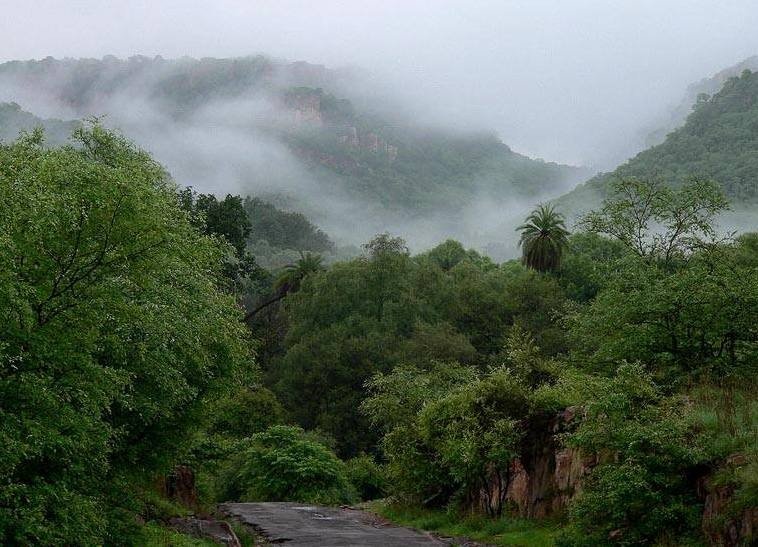
The landscape is dry deciduous forest, open grassland, rocky outcrops and seasonal lakes, with a core area of roughly 392 sq km. Dhok and gum trees hold the canopy, and the forest thins through the drier months, which helps when you are scanning for wildlife.
Safaris run in ten zones across two daily sessions, from roughly October to June. We handle permits, zone guidance and the practical details around your visit, so your day in the forest stays simple.
Highlights
- Project Tiger reserve since 1973
- Roughly 392 sq km of core area
- Ten safari zones with daily allotment
- 270+ bird species recorded
- Ranthambore Fort standing inside the park
- Easy access from Sawai Madhopur station
Quick facts
| Location | Sawai Madhopur district, southeast Rajasthan |
|---|---|
| Core area | Approximately 392 sq km |
| Zones | Ten safari zones, allotted daily by the Forest Department |
| Sessions | Morning and afternoon, timings set by the authorities |
| Season | Generally October to June, closed during the monsoon |
| Nearest rail | Sawai Madhopur Junction |
History and conservation
Ranthambore was declared among the original Project Tiger reserves of India in 1973 and holds national park status. Its core forest is managed as protected habitat, while visitors explore part of the landscape on organised drives. National park status and Project Tiger protection have shaped how the forest is managed ever since.
Forest, water and stone
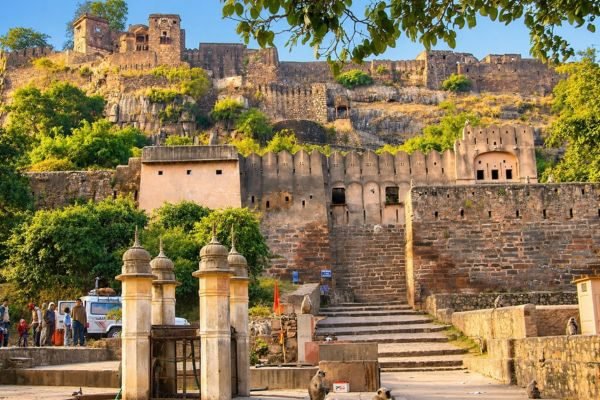
Four faces define the park: dry deciduous woodland of dhok and gum, seasonal lakes such as Padam Talao and Rajbagh Talab that fill with the rains, rocky ridges that give cover to leopards, and the fort itself rising inside the boundary.
The lakes matter most in the dry months. As water shrinks, deer, sambar and the tigers that follow them concentrate around the remaining pools, which is why the lakeside routes are the busiest and why mornings near water are so productive.
Wildlife of Ranthambore
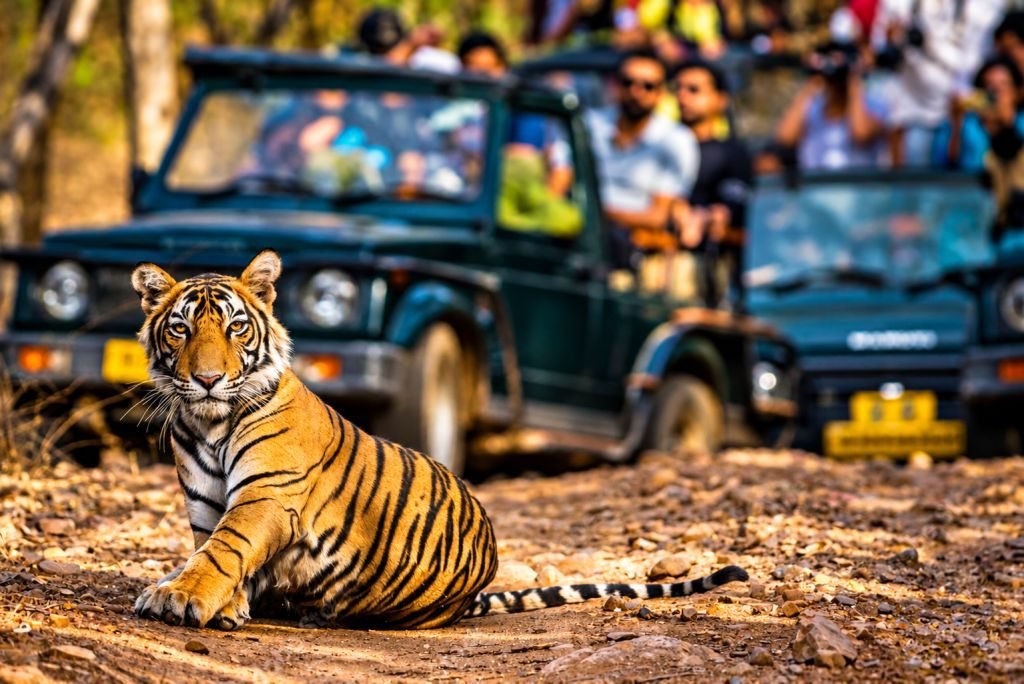
The park is best known for its tigers, but a drive passes many other residents: leopards in the rocky country, sloth bears on the forest tracks, sambar, chital, nilgai and wild boar as the common grazers, marsh crocodiles beside the lakes and more than 270 bird species including eagles, kingfishers and winter visitors.
Sightings are naturally unpredictable. No drive guarantees an encounter, and that uncertainty is exactly what makes a morning in the forest worth waking for.
Seasons and timings
Two sessions run each day while the park is open: a morning session from around sunrise and an afternoon session in the early-to-mid afternoon. The park generally closes for the monsoon from roughly July to September. Exact entry timings are set by the forest department and shared with you when your booking is confirmed.
Travel tips
- Book safaris well ahead for winter weekends and holidays.
- Carry the same photo ID that was used for the booking.
- Two or three drives across different shifts give the best chance of seeing several zones.
- Stay in Sawai Madhopur the night before an early morning drive.
Frequently asked questions
How big is Ranthambore National Park?
The core area is roughly 392 sq km, in Sawai Madhopur district at the meeting point of the Aravalli and Vindhya ranges.
How many safari zones does the park have?
Ten. Entry to a zone depends on the daily allocation made by the forest department, and we share updated guidance when you book.
What is the best season to visit Ranthambore?
The park opens roughly in October and stays open until June, closing for the monsoon. November to February is the most comfortable, while March to June is hotter but often rewarding around water.
Can you walk inside the national park?
No. Visitors explore the park on organised drives in registered safari vehicles along designated routes, which protects both wildlife and guests.
Are tiger sightings guaranteed?
No. Ranthambore is famous for its tigers, but wildlife sightings are naturally unpredictable, and every drive follows the forest and the behaviour of the animals.