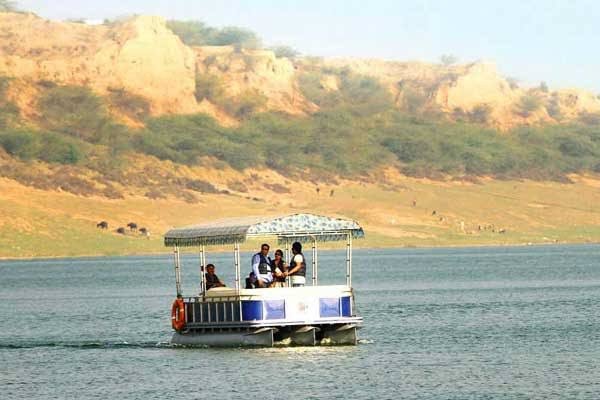
The Chambal rises in the Vindhya hills and flows north through the badlands of East Rajasthan, then on through Madhya Pradesh and into Uttar Pradesh. Its deep channels, sandbanks and ravine banks form the National Chambal Sanctuary, a protected river ecosystem shared by three states.
The sanctuary is best known for its crocodilians: gharials with their long, narrow snouts and broader mugger crocodiles, both often seen lined up on the sandbanks in plain sight. The Gangetic river dolphin lives in the quieter pools too, though it surfaces only occasionally and is never promised.
A boat safari here is the opposite of a jungle drive: a slow, guided cruise of several hours, moving at drifting pace while birds work the shallows and the ravine walls slide past. It is an easy companion to a Ranthambore trip, for river wildlife beyond the big cats.
Highlights
- Gharial and mugger crocodile country
- Gangetic river dolphins in the deeper pools
- Indian skimmers, terns, storks and kingfishers
- Calm guided cruise of several hours
- October to March is the prime season
- Reachable by road from Ranthambore and Jaipur
Quick facts
| Location | Chambal river region of East Rajasthan |
|---|---|
| Sanctuary | National Chambal Sanctuary, shared by Rajasthan, Madhya Pradesh and Uttar Pradesh |
| Best season | October to March |
| Format | Slow, guided boat cruise of several hours |
| Wildlife | Gharials, mugger crocodiles, river dolphins and river birds |
| From Ranthambore | Reachable by road; a half-day or full-day trip |
What you may see on the river
Gharial, the long-snouted fish-eating crocodilian that gives the river its fame; mugger crocodile sharing the same sandbanks; Gangetic river dolphin, present but rarely seen, so treat any surfacing as a bonus; Indian skimmer with its orange bill skimming the surface; river terns hovering and diving; and storks and sandpipers working the shallows.
Wildlife keeps its own schedule. Quiet engines, a patient boatman and calm water give you the best chance, and sightings stay unpredictable on the day.
A protected stretch of river
What makes the sighting possible is the protection itself. The National Chambal Sanctuary keeps the banks quiet, the water clean and the gharial and dolphin populations in place. As a visitor you stay with the boat, follow the operator’s instructions and leave the bank undisturbed.
Planning the river day
The river is reachable by road from Ranthambore and Jaipur, which is why most travellers fold it into an existing safari week rather than treating it as a separate trip. It also pairs naturally with a day in Sawai Madhopur town, where the fort, the temple and the museum sit a short drive from the station.
Bring sun protection, a hat, water, binoculars and a camera with a strap, and keep movements gentle when the boat stops near a bank.
Travel tips
- Choose October to March for comfortable weather and the most birds.
- Carry photo ID, sunglasses, sunscreen and a hat.
- Wear soft-soled shoes for the river bank.
- Binoculars make a big difference for birdwatching.
Frequently asked questions
How long is the Chambal river safari?
A boat safari is a slow, guided cruise of several hours on a set river route, with a morning or afternoon departure. The local boatman sets the pace and stops at sandbanks and quiet bends where wildlife tends to gather.
Which months are best for the Chambal River?
October to March is the prime season, with comfortable weather on open water and the largest flocks of birds feeding along the shallows and sandbanks.
Is a Chambal boat safari safe for families?
Yes. The water is generally calm, boats are run by experienced local boatmen and life jackets are kept on board. Children should stay seated while the boat is moving.
Can the Chambal be combined with a Ranthambore trip?
Yes. The river stretch is reachable by road from Ranthambore and Jaipur, so many travellers add a river morning to the same week as their tiger safaris.
Are dolphin sightings guaranteed?
No. Gharials and mugger crocodiles are regularly seen basking on the sandbanks, but the Gangetic river dolphin is elusive and only sometimes surfaces.